For business owners, a website needs to do more than look good. It should represent your brand, support your business goals, help customers find the right information, and make it easy for them to buy, book or make an enquiry.
Choosing bespoke web design can make a real difference. Instead of relying on a ready-made template or an off-the-shelf solution, a custom approach creates a website tailored specifically to your business and target audience.
In this guide, we explain what bespoke web design means and involves, how it differs from a template website, and why a custom website can give your business a more flexible, effective and professional online presence.
If you’re planning to launch a new website or redesign your current site to improve performance, our custom web design services can help your business grow online. Contact us to learn more.
What is bespoke web design?
Bespoke web design is the process of planning, designing and building a website around specific goals, users and requirements, rather than starting with a fixed template.
A bespoke website can include:
- Custom website design that reflects the brand
- A clear structure that helps users find information
- Planned user journeys that guide visitors towards enquiries, bookings or purchases
- Flexible content areas managed through a content management system
- Bespoke web development for forms, e-commerce, booking tools or integrations
- Technical foundations that support speed, usability and SEO
The aim is to create a custom website that works for the business, its customers and its future growth. Research into competitors, customer behaviour and search opportunities can help shape a bespoke site that is practical, relevant and built to perform.
Bespoke website vs template website: what’s the difference?
A template website uses a pre-designed layout, which can be a practical option for simple projects, smaller budgets or businesses that need a basic site quickly.
The main difference with bespoke web design is that the website is planned and built around specific requirements, rather than adapted from an existing framework. This gives greater control over the design, structure, functionality, and presentation of website content.
Here’s a quick comparison:
| Consideration | Bespoke website | Template website |
|---|---|---|
| Design | Created around the brand and project requirements | Based on a pre-made layout |
| Flexibility | More control over layout, content and functionality | Limited by the template’s structure |
| Functionality | Can include custom features and integrations | Usually relies on existing theme options or add-ons |
| Scalability | Easier to adapt as the business grows | Can become restrictive over time |
| Cost and timing | Usually requires a bigger budget, more planning and development time | Often quicker and lower cost to launch |
| Best suited for | Businesses that need a more tailored, long-term website solution | Simpler websites with fewer custom requirements |
A template website may be enough if the aim is a simple online presence. However, if the website needs to support SEO, conversions, customer experience, or future development, it often makes sense to choose a bespoke approach.
Key benefits of bespoke web design
A more polished online presence
Your website can influence how potential customers judge your business. If it feels generic, outdated or difficult to use, it may affect trust from the first impression.
With bespoke design, your website can be created to reflect the quality, personality and professionalism of your brand. The layout, messaging, imagery and calls to action can all work together to communicate who you are and why customers should choose you.
This can help create a more polished and consistent online presence, especially in competitive markets where trust, clarity and presentation all matter.
A better user experience
Good web design should make your website easy to use. Visitors should be able to understand what you do, find the right information and move towards an enquiry, booking or purchase without confusion.
A bespoke site allows the user journey to be planned around your customers. This includes clear navigation, logical page structure, accessible design, useful calls to action, and making sure each page presents information in a way that helps users make decisions.
For example, a service-led business may need clear service pages and enquiry forms, while an e-commerce website may need product filters, clear categories and a smooth checkout.
A stronger foundation for SEO
A bespoke website can be planned with SEO in mind from the earliest stages of the project, including the site structure, page layouts, technical setup and content requirements.
This means the site can be built to support users, search engines and AI tools, with clear pages, logical headings, internal links, mobile-friendly layouts, fast-loading pages and useful website content that clearly explains your services.
Bespoke web design alone does not guarantee rankings on Google or visibility in AI-generated answers. However, a well-structured bespoke website can give your SEO, GEO and wider marketing activity a stronger foundation to build on.
More flexibility as your business grows
As your business changes, your website may need to change with it. You might want to add new services, improve enquiry forms, introduce e-commerce features, connect to a CRM, create landing pages or make content easier to update.
With bespoke web development, these requirements can be considered from the beginning. Instead of relying heavily on workarounds or unnecessary add-ons, you can build a custom website with the right functionality for your current needs and future plans, giving you more control over how the site works now and more room to adapt it as your requirements change.
What is involved in a custom web design process?
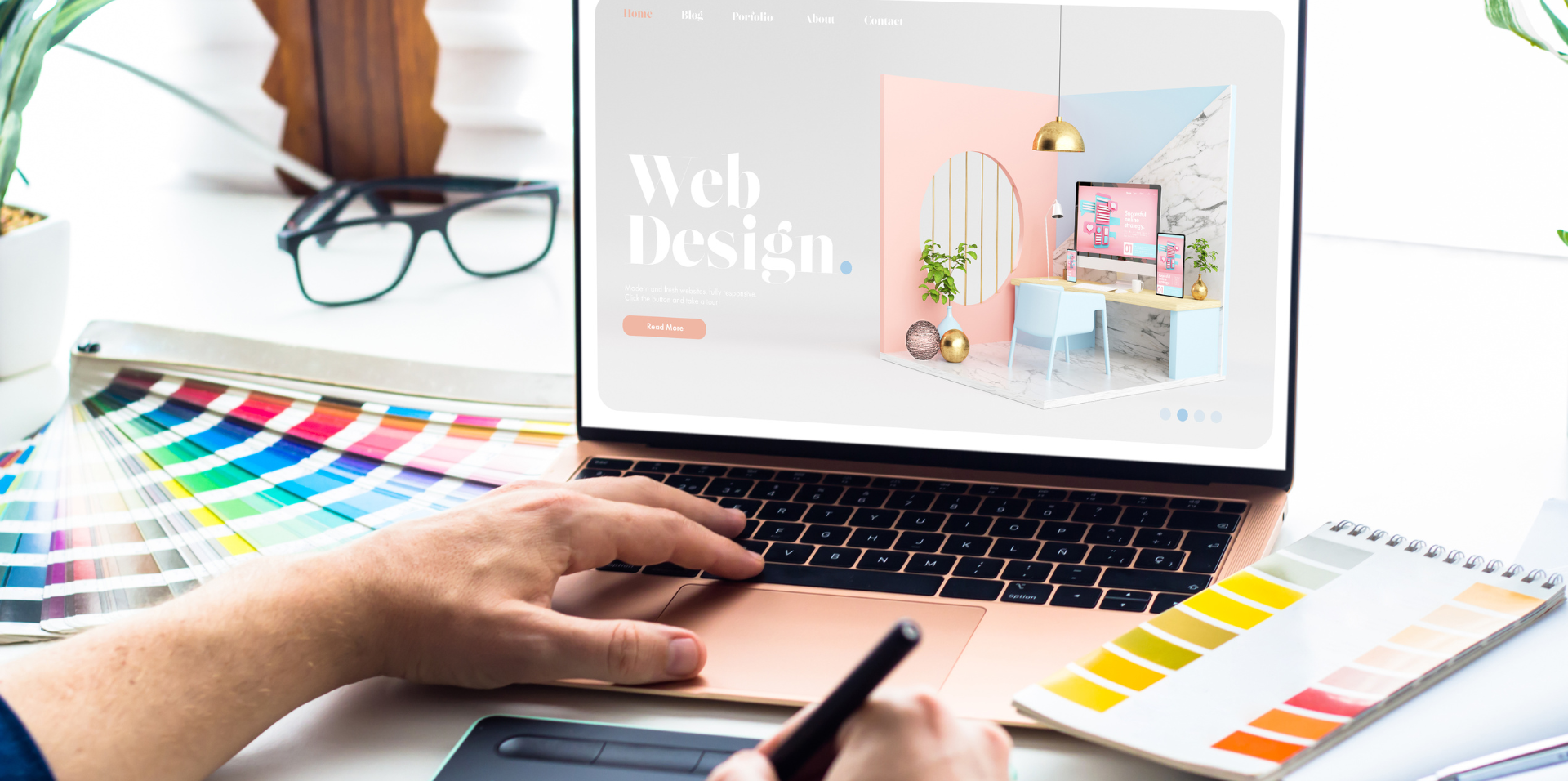
Every bespoke web design project is different and tailored to each business, but the process will usually include:
- Discovery and research: Understanding the business, audience, goals, competitors and any existing website performance.
- Planning the structure: Mapping out key pages, content requirements and the user journey so the site is easy to navigate.
- Design: Creating a custom design that reflects the brand, supports the content and helps guide users towards key actions.
- Development: Building the website, setting up the content management system, and adding any required features, forms or integrations.
- Testing and launch: Checking the site across devices and browsers, including forms, links, page speed, tracking and key SEO elements.
- Ongoing support: Keeping the website updated, secure and performing well as the business grows.
This structured approach helps ensure the final website is not only visually strong, but also practical, user-friendly and built to support long-term performance.
How much does bespoke web design cost?
The cost of a bespoke website depends on the size, complexity, and requirements of the project. A smaller custom website with a few core pages will usually cost less than a larger bespoke build with e-commerce functionality, integrations or advanced features.
As every project is different, it is difficult to give one fixed cost without understanding what the website needs to achieve. Before asking for quotes, it can help to think about:
- What you want the website to do for your business
- Which pages, features or integrations you are likely to need
- Whether you need support with copywriting, SEO or content migration
- How much flexibility you need from the content management system
- What support you may need after the website goes live
A bespoke website will usually require more investment than a template website, as it involves more planning, design, and development time. However, it is worth considering the potential value a well-designed website can deliver through improved user experience and greater credibility.
When is a bespoke website the right choice?
Bespoke website design is often the right choice when your website needs to play a bigger role in your business. This might mean generating more enquiries, improving online sales, supporting SEO and GEO, or giving customers a clearer, more professional experience.
It is also worth considering if your current website feels outdated, restrictive, difficult to manage, or no longer reflects the quality of your business. A bespoke website gives you more control over the design, structure, functionality, and user journey than a standard template typically offers.
For businesses that rely on their website to attract, inform and convert customers, a custom design can provide a more flexible and scalable platform.
Summary
Bespoke web design is about creating a website around your business, rather than fitting your business into a pre-made layout. It gives you greater flexibility, control and the opportunity to build a site that reflects your brand, supports your users and aligns with your goals.
For businesses that rely on their website to generate enquiries, support marketing activity or build trust with customers, a bespoke website can provide a stronger foundation than many off-the-shelf solutions. With the right strategic approach, bespoke website design can support user experience, SEO, functionality and long-term growth.
Speak to britweb about bespoke web design
Looking to create a website that better supports your brand, customers and business growth? At britweb, we design and develop bespoke websites that combine creative design, technical performance and digital marketing insight.
Take a look at our case studies and get in touch to start planning a website that works better for your business.
Frequently Asked Questions
Is bespoke web design better than a template website?
Bespoke web design is often better for businesses that need more flexibility, specific functionality or a more distinctive online presence. A template website can still be suitable for simpler projects, smaller budgets or faster launches.
How long does it take to build a bespoke website?
The timeframe depends on the size and complexity of the website. A smaller bespoke website may take several weeks, while a larger project with advanced features, integrations or detailed content requirements may take longer.
Is bespoke web design suitable for small businesses?
Yes, bespoke web design can work well for small businesses that need a professional, flexible and scalable website. It is especially useful when the site needs to support enquiries, bookings, sales or long-term growth.